
This is a collection of projects that show how I design, develop, and deliver effective digital learning experiences.
I focus on clarity, accessibility, and human-centered design. This makes learning easier, more inclusive, and more engaging for a wide range of audiences.
Each project below includes a short description, my role, the tools I used, and the impact of the work.
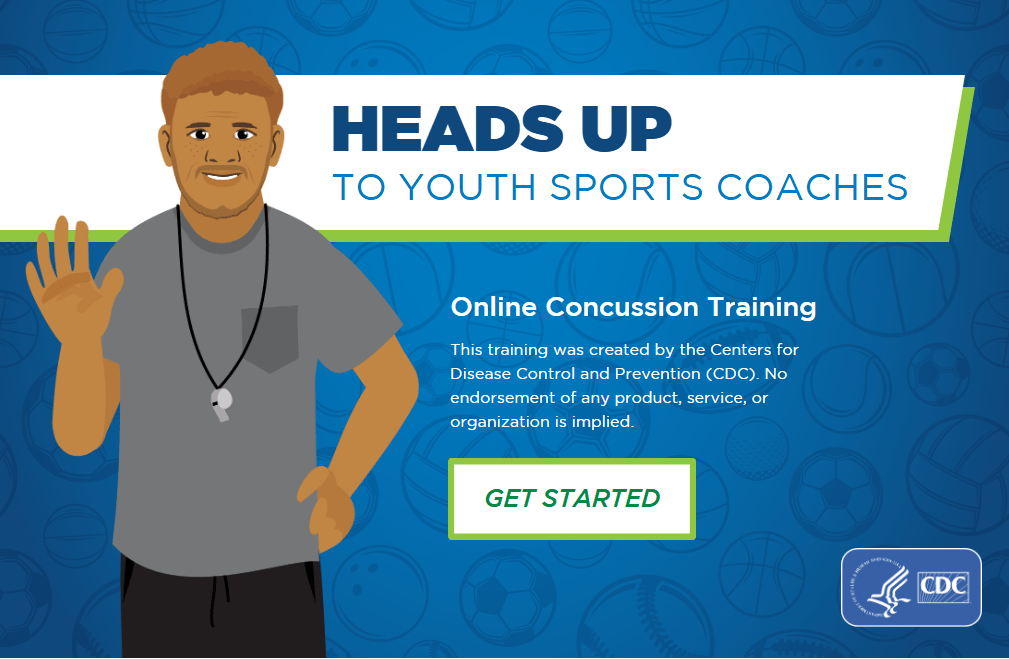
HEADS UP to Youth Sports Coaches: Online Concussion Training
Role: Task Lead, Instructional Designer, Lead Developer, LMS Consultant
Tools: Lectora, SCORM, CDC TRAIN
Key Skills: adult learning theory, accessible design, scenarios and interactions
Summary: I was task lead for this project, providing clarity, direction, and structure for the team. I led internal and client-facing meetings throughout the project and clearly explained training, instructional design (ID) processes, adult learning theory, and accessibility to those who were unfamiliar with them. Additionally, I was the lead eLearning developer for the CDC on this project, which served a national audience. I collaborated closely with SMEs, managed version control and iterative revisions, and ensured the course met strict Section 508 accessibility requirements.
Impact: This training, developed for the CDC, is designed specifically for youth sports coaches. This training covers concussion basics, what to do when an athlete shows signs and symptoms of concussion, and explores how coaches can contribute to concussion prevention and safety. Taken by more than 200,000 learners across the U.S., this training is a vital step in protecting the health of youth athletes.
Understanding and Managing Alpha-Gal Syndrome for Healthcare Providers
Role: Lead Developer, LMS Consultant
Tools: Lectora, SCORM, CDC TRAIN
Key Skills: adult learning theory, accessible design, scenarios and interactions, “scrolly” format
Summary: As the lead eLearning developer on this project for the CDC, I collaborated closely with the instructional designer, SMEs, and other stakeholders, managing version control, iterative revisions, accessibility, and launching on CDC TRAIN.
Impact: This training course is designed to increase awareness and knowledge of alpha-gal syndrome (AGS) among healthcare providers and public health practitioners. Learners gain insight into the latest research on AGS, practical strategies for diagnosis, and tools to better support patients managing AGS.
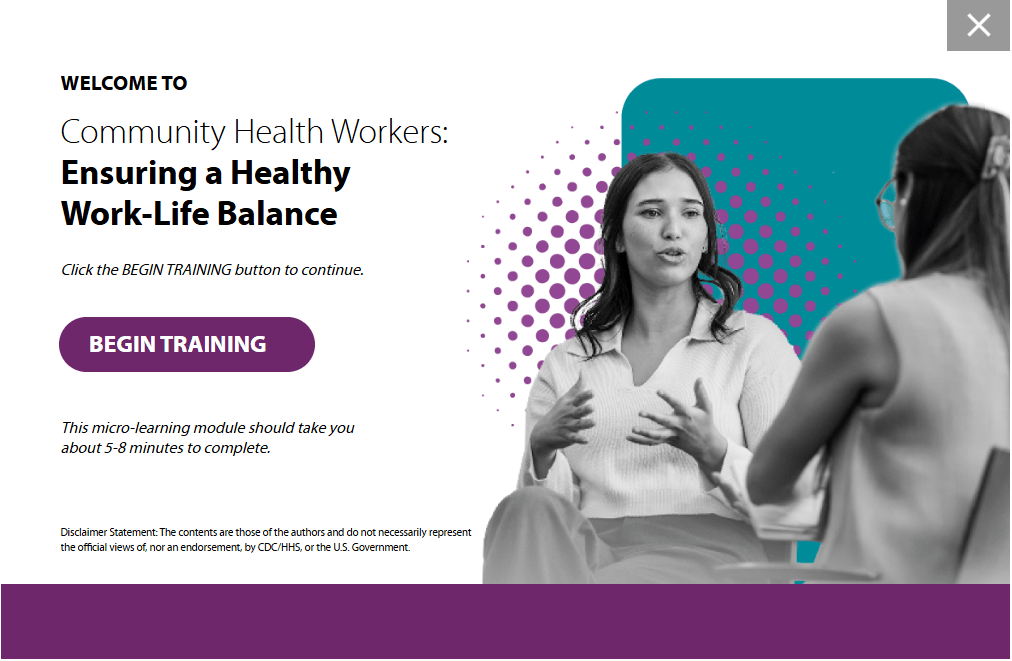
Community Health Workers: Ensuring a Healthy Work-Life Balance
Role: Instructional Designer, Lead Developer
Tools: Lectora, SCORM, HTML
Key Skills: microlearning module, adult learning theory, accessible design, scenario, branching scenario, interactions
Summary: As the ID and lead developer for this microlearning module, I collaborated closely with the SMEs to manage version control, iterative revisions, and accessibility.
Impact: This microlearning module, developed for the National Association of City and County Health Officials (NACCHO), acknowledges that situations are complicated and encourages community health workers (CHWs) to focus on taking control, practicing self-care, and staying strong despite broader systemic challenges.
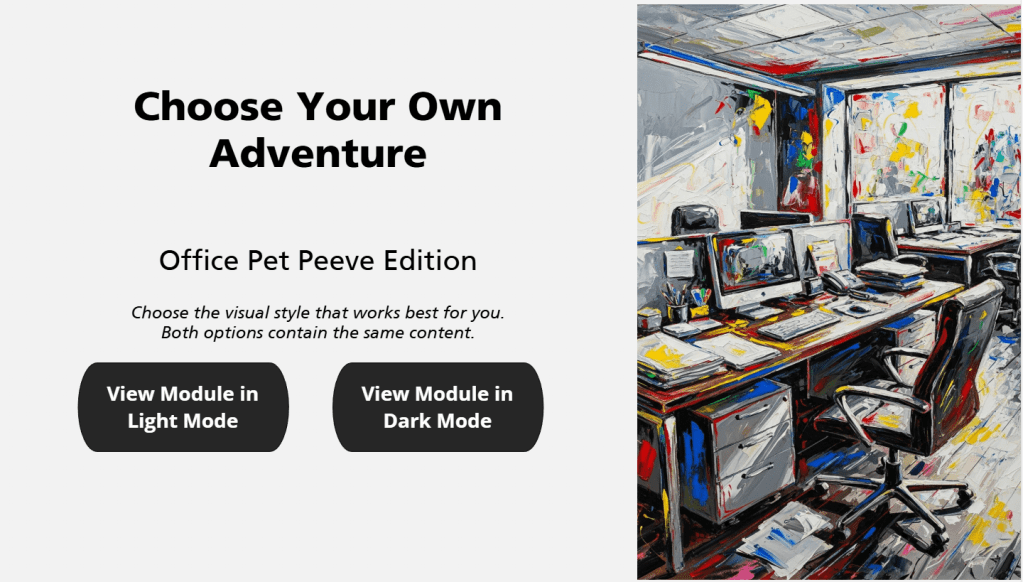
Office Pet Peeves: A Branching Scenario
Role: Instructional Designer, Developer
Tools: Articulate Storyline 360
Key Skills: branching scenario, adult learning theory, accessible design, dark mode UI, dialog-based interactions
Summary: I designed and developed this branching scenario as a portfolio piece to demonstrate my Articulate Storyline skills. Learners navigate a series of common workplace situations (each with multiple response options) and receive outcome-based feedback for every choice. I built the interaction architecture, wrote all scenario and feedback content, and designed the UI with accessibility in mind, including dialog layers to manage focus for screen reader users.
Impact: This modules uses a low-stakes, exploratory format to help learners reflect on how they respond to everyday workplace friction. With no right or wrong answers (only outcomes and takeaways), it encourages self-awareness over compliance, making it well-suited for professional development and soft skills contexts.

